
Sensors are a key component in the digital transformation of companies and organizations. They make it possible to capture environmental data, monitor processes in real time, and automate actions with greater precision. That is why understanding the main types of sensors and their benefits is essential for developing more efficient, scalable, and data-driven technology projects.
Today, solutions such as the inductive sensor, the proximity sensor, the humidity sensor, the magnetometer, the accelerometer, and the position sensor are used across sectors as diverse as industry, logistics, healthcare, sports, research, and maintenance. Choosing the right sensor depends on what needs to be measured, how the information will be used, and the environment in which it will be deployed.
Types of sensors and how to apply them by industry
Each sensor is designed to capture a specific variable. Before implementing a sensing solution, it is worth understanding what each technology brings to the table.
The inductive sensor is used to detect metallic objects without contact. It is especially common in industrial automation, where it controls the presence of parts, performs counts, or verifies positions within a machine or production line. Its main advantage is reliability in demanding environments.
The proximity sensor detects the proximity or presence of objects, people, or assets. It is used in access control, logistics, indoor location, automation, and process tracking. It is a very useful tool when the goal is to understand movements, routes, or dwell times.
The humidity sensor measures relative ambient humidity and helps control conditions that may affect products, materials, or facilities. It is especially important in sectors such as food, agriculture, laboratories, warehouses, or technical spaces where the environment must be kept within certain ranges.
The magnetometer measures orientation and direction relative to the magnetic field. It is commonly used in navigation, positioning, and motion analysis systems. When a project needs to interpret trajectories or orientation, this type of sensor provides great value.
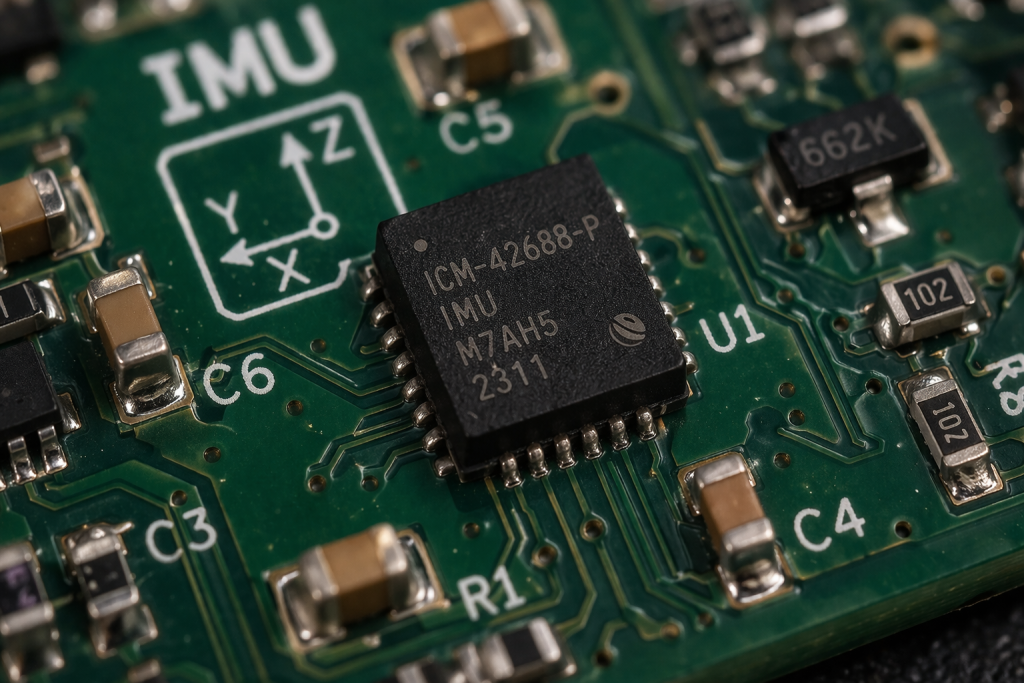
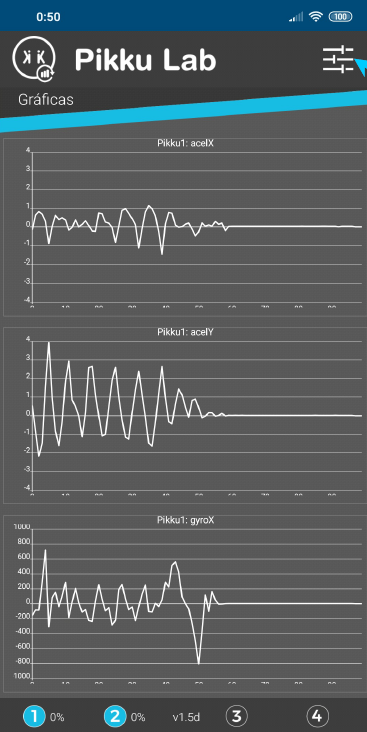
The accelerometer measures accelerations, vibrations, inclinations, and impacts. It is therefore used both in machinery monitoring and in wearables, sports, health, and human movement analysis. It is one of the most versatile sensors for projects that need to understand dynamic changes.
Finally, the position sensor makes it possible to track displacements or relative positions within a system. It is used in robotics, automated machinery, and environments where motion control is essential for process efficiency.
Benefits of project sensorization
Sensorization offers clear advantages for any organization looking to improve its operational control. The first benefit is real-time data capture. This makes it possible to move from estimation-based management to decision-making supported by objective information.
Another important benefit is improved efficiency. When a company can continuously monitor critical variables, it detects deviations earlier and reduces reaction times. This helps optimize resources, minimize errors, and improve the performance of teams and processes.
Sensors also make it possible to anticipate incidents. An abnormal vibration, an unexpected change in humidity, or a variation in position can become early warning signals of a problem. Detecting them in time facilitates predictive maintenance, improves safety, and reduces costs associated with failures or downtime.
Automation is another major benefit. A sensorized system can trigger alerts, log events, or initiate automatic actions without manual intervention. This speeds up operations and enables more scalable management.
In addition, sensorization provides traceability. Recording what happened, when, and under what conditions makes it possible to analyze historical data, identify patterns, and continuously improve processes, products, and services.
How to choose among the different types of sensors for your project
Choosing among the different types of sensors does not depend only on the variable to be measured. The project’s objective, the operating environment, and the type of data needed to take action also play a role.
If the need is to detect metallic parts on a production line, the inductive sensor is usually the most appropriate option. If the goal is to know whether a person or asset enters a specific area, a proximity sensor is worth considering. When what matters most is controlling environmental conditions, the humidity sensor becomes an essential technology. If the project requires analyzing vibrations, impacts, or inclinations, the accelerometer provides a very comprehensive response.
Factors such as battery life, connectivity, reading frequency, ease of integration, and system scalability must also be taken into account. In reality, the value lies not only in the sensor itself, but in how it is integrated within a solution capable of capturing, transmitting, and converting data into useful information.
Integrate smart sensors into your project with Blautic
For a sensorization strategy to deliver results, it is not enough to simply install devices. It is necessary to design a solution tailored to the real needs of the project and oriented toward turning data into value.
Blautic develops sensorization solutions for different sectors, integrating hardware, firmware, connectivity, and applied data intelligence. This approach makes it possible to turn a technical requirement into a useful tool for controlling processes, automating actions, and improving decision-making.
Understanding the main types of sensors is the first step toward driving smarter, more competitive projects. The next step is to have a technology partner capable of integrating that technology in a personalized, efficient way that is aligned with business objectives.