
Injury rehabilitation is a process that requires consistency, monitoring, and motivation on the part of the patient. However, one of the main challenges in this field is maintaining adherence to exercises and therapeutic guidelines throughout the recovery process. In this context, gamification in healthcare emerges as an innovative tool capable of transforming the rehabilitation experience into a more motivating, interactive, and effective process.
Technology companies specializing in digital innovation, such as Blautic, are developing projects that incorporate gamification strategies to improve interaction between patients, healthcare professionals, and monitoring technologies. This approach not only aims to improve therapeutic outcomes, but also to open up new opportunities for collaboration between the technology and healthcare sectors.
What Is Gamification and What Are Its Characteristics?
Gamification consists of applying mechanics and dynamics typical of video games in non-playful contexts, with the aim of increasing users’ motivation, participation, and engagement.
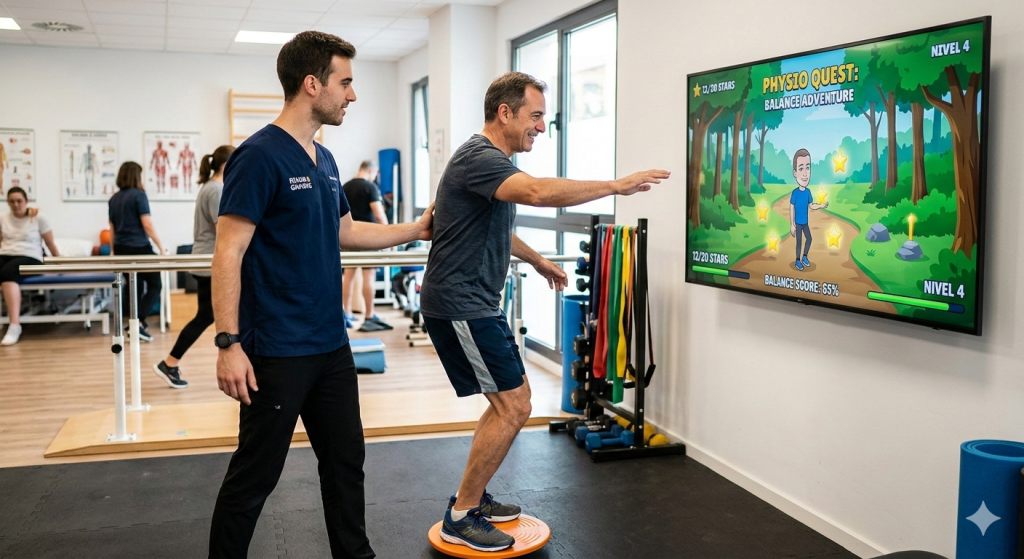
When we talk about gamification in healthcare, we refer to the incorporation of these dynamics into medical or therapeutic processes to improve patient adherence and optimize clinical outcomes. In the case of injury rehabilitation, this may involve turning repetitive exercises into interactive challenges or incorporating rewards that encourage treatment continuity.
Among the main characteristics of gamification are:
- Reward system: points, medals, or achievements earned by completing exercises or reaching goals.
- Progression and levels: the patient gradually advances as their performance improves.
- Challenges and missions: specific goals that structure the rehabilitation process.
- Narrative elements: stories or contexts that turn the therapeutic activity into a more engaging experience.
In the projects developed by Blautic, these characteristics are integrated with digital technologies such as sensors, monitoring platforms, or mobile applications. In this way, healthcare professionals can monitor the patient’s progress while the patient experiences an engaging interaction with their treatment.
Benefits of Gamification in Injury Rehabilitation
The application of gamification strategies in therapeutic processes offers multiple benefits for both patients and healthcare professionals.
- Greater adherence to treatment
- Improved patient engagement
- Data monitoring and analysis
- More personalized experiences
- Emotional motivation
Strategies for Applying Gamification in Injury Rehabilitation
Implementing gamification strategies in healthcare projects requires a combination of technological design, clinical knowledge, and an understanding of the user experience.
Some key strategies include:
Transforming Therapeutic Exercises into Interactive Challenges
Repetitive movements can be turned into small challenges that the patient must complete. For example, raising the arm to a certain height may represent “reaching a goal” within a game.
Incorporating Progression Systems
The sense of progress is essential for maintaining motivation. In injury rehabilitation, this can be reflected in levels that are unlocked as the patient improves their mobility or strength.
Using Symbolic Rewards
Rewards do not necessarily have to be material. Badges, points, or rankings can create a sense of achievement that reinforces positive behavior.
In Blautic-led technology projects, these strategies are designed in collaboration with healthcare professionals to ensure that the gamified experience maintains the necessary therapeutic rigor.
Tools for Applying Gamification in Injury Rehabilitation
The development of gamification projects in healthcare requires the use of different technological tools that make it possible to integrate game dynamics with clinical processes.
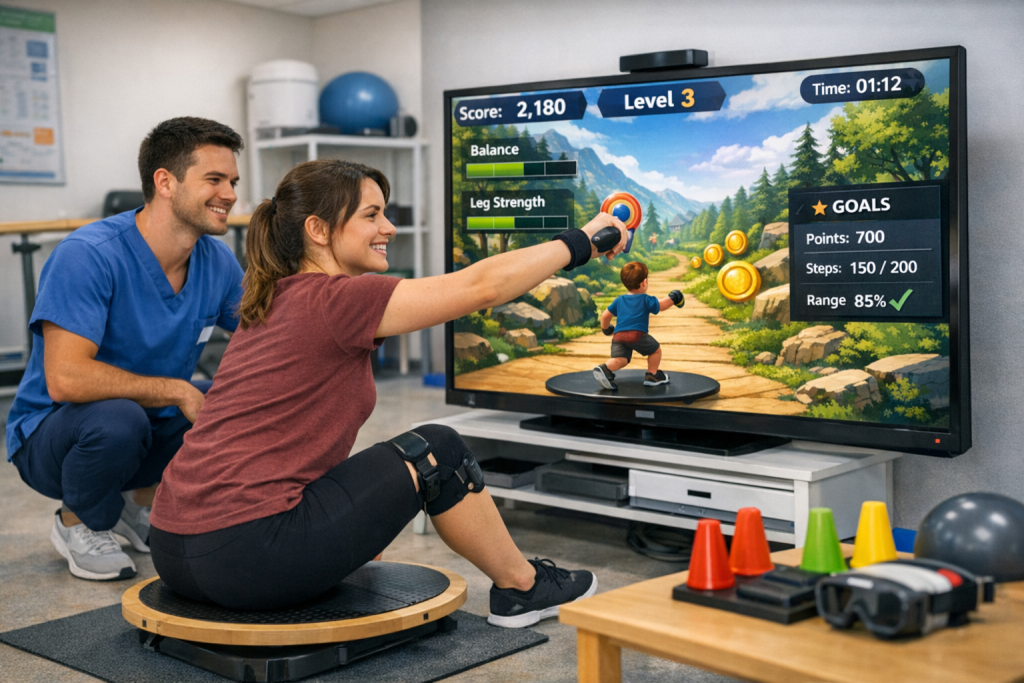
Mobile Applications for Therapeutic Monitoring
Apps allow patients to perform guided exercises from home, track their progress, and receive rewards for completing scheduled activities.
Sensors and Motion Devices
Body sensors or tracking cameras make it possible to analyze exercise performance. These data can be used to generate scores within the gamified system.
Data Analysis Platforms
Analysis tools allow healthcare professionals to evaluate patient performance and adjust the rehabilitation plan according to the results obtained.
Virtual or Augmented Reality Environments
Virtual reality is beginning to be used to create immersive experiences that turn rehabilitation exercises into interactive activities. This is especially useful in the recovery of mobility or coordination.
Innovation and Collaboration in Healthcare
The gamification projects developed by Blautic show how technology can contribute to improving the experience and effectiveness of injury rehabilitation. This type of solution opens up new opportunities for collaboration among technology companies, healthcare centers, researchers, and clinical professionals.
Furthermore, the methodologies used in these projects can be extrapolated to other fields. For example, they can be applied in prevention programs, health education, or in educational and corporate environments where it is necessary to encourage user participation and engagement.
Ultimately, gamification in healthcare not only represents technological innovation, but also a new way of understanding the relationship between patients, professionals, and digital tools. When designed appropriately, it can become a key ally in improving motivation, optimizing treatments, and transforming the recovery experience.